
The Complete Guide to Orthopedic Health
Everything you need to know about bones, joints, fractures, arthritis, sports injuries, spinal disorders, and modern musculoskeletal treatments — in one definitive reference.
Understanding the Musculoskeletal System
The musculoskeletal system is the structural framework of the human body. It supports posture, enables movement, stores essential minerals, protects internal organs, and produces blood cells. This system is made up of more than 206 bones, over 360 joints, and nearly 700 skeletal muscles working together in remarkable coordination.
The field of orthopedics focuses on diagnosing, treating, preventing, and rehabilitating disorders involving bones, joints, muscles, tendons, ligaments, and the spine. The word originates from the Greek terms orthos meaning “straight” and paidion meaning “child,” reflecting the early focus on correcting skeletal deformities in children.
Today, orthopedic medicine covers everything from sports injuries and arthritis to spinal surgery and robotic-assisted joint replacement.
Key Facts About Human Bones
Human bones are far more dynamic than many people realize. They are living tissues that constantly adapt and regenerate throughout life.
Important Bone Facts
Bone continuously remodels itself through a biological process called bone remodeling. Most of the skeleton is gradually renewed every 10 years.
Bone is primarily composed of collagen for flexibility and hydroxyapatite for hardness and strength.
The femur (thigh bone) is the strongest and longest bone in the body.
The stapes inside the middle ear is the smallest bone in the human body.
Bone marrow produces red blood cells, white blood cells, and platelets, making the skeletal system essential to immune function and oxygen transport.
Bones also act as storage reservoirs for calcium and phosphorus.
Types of Joints in the Human Body
Joints are structures where two or more bones meet. Different joint designs allow different types of movement.
Joint Type | Example Location | Range of Motion | Clinical Importance |
|---|---|---|---|
Ball & Socket | Hip, Shoulder | Full multi-directional movement | Frequently replaced during joint replacement surgery |
Hinge | Knee, Elbow, Ankle | Flexion and extension | Commonly injured in sports |
Pivot | Neck, Forearm | Rotational movement | Vulnerable to rotational trauma |
Gliding (Plane) | Wrist, Vertebrae | Sliding motion | Associated with degenerative joint disease |
Saddle | Base of thumb | Bi-axial movement | Common site of arthritis in older adults |
Bone Fractures: Classification and Healing
A fracture occurs when force applied to a bone exceeds its structural strength. The term “fracture” and “broken bone” mean the same thing medically.
Orthopedic surgeons classify fractures based on:
The fracture pattern
Bone displacement
Whether the skin is broken
Stability of the fracture
Common Types of Fractures
1. Transverse Fracture
A straight horizontal break across the bone, usually caused by direct trauma.
2. Spiral Fracture
Occurs from twisting forces. Common in skiing, football, and rotational injuries.
3. Comminuted Fracture
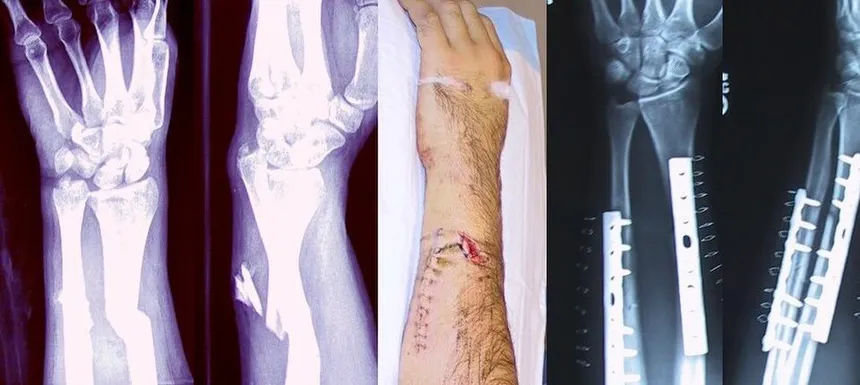
The bone breaks into multiple fragments. Often requires surgery using plates, screws, or rods.
4. Stress Fracture
Tiny cracks caused by repetitive stress, especially in runners and athletes.
5. Pathological Fracture
Occurs in bones weakened by diseases such as osteoporosis or cancer.
6. Greenstick Fracture
An incomplete fracture common in children where the bone bends and partially breaks.
How Bones Heal
Bone healing happens through four biological stages:
Hematoma Formation – blood clot develops around the fracture
Soft Callus Formation – fibrocartilage stabilizes the area
Hard Callus Formation – new bone develops
Bone Remodeling – bone regains normal structure and strength
Most uncomplicated fractures heal clinically within 6–8 weeks, though complete remodeling may take several months.
Arthritis — The Leading Cause of Disability
Arthritis affects millions of people worldwide and remains one of the most common causes of chronic pain and disability.
The term arthritis refers to more than 100 different conditions that cause:
Joint pain
Swelling
Stiffness
Reduced movement
Inflammation
Early diagnosis and treatment are essential to prevent permanent joint damage.
Type | Cause | Typical Age | Main Symptoms | Common Treatment |
|---|---|---|---|---|
Osteoarthritis | Cartilage wear and tear | 50+ | Stiffness, joint pain, crepitus | Weight loss, NSAIDs, physical therapy |
Rheumatoid Arthritis | Autoimmune inflammation | 30–50 | Symmetrical joint swelling | DMARDs and biologic therapy |
Gout | Uric acid crystal buildup | 40–60 | Sudden severe joint pain | Colchicine, NSAIDs |
Psoriatic Arthritis | Autoimmune disease linked to psoriasis | 30–50 | Swollen digits, nail changes | Immunotherapy and DMARDs |
A Common Myth
“Arthritis only affects elderly people and nothing can be done about it.”
Modern treatments, lifestyle changes, physical therapy, and advanced medications can dramatically slow disease progression and preserve quality of life.
Sports Injuries: Common Orthopedic Problems
Sports and exercise are major causes of orthopedic injuries, especially among athletes and physically active individuals.
Common Sports Injuries
ACL Tear
A tear of the anterior cruciate ligament in the knee caused by sudden pivoting or stopping movements.
Rotator Cuff Tear
Damage to the shoulder muscles and tendons responsible for stabilization and overhead movement.
Meniscus Tear
A tear in the knee cartilage caused by twisting injuries.
Achilles Tendon Rupture
A severe tendon injury often described as feeling like being “kicked” in the back of the leg.
Ankle Sprain
One of the most common sports injuries worldwide, often involving ligament damage.
Shin Splints
Pain along the tibia caused by repetitive overuse.
Preventing Sports Injuries
Injury prevention strategies include:
Proper warm-up routines
Strength and flexibility training
Neuromuscular conditioning
Adequate hydration
Correct footwear
Gradual progression in training intensity
Research shows that structured warm-up programs can significantly reduce injury rates in athletes.
Spinal Disorders
Back pain is one of the most common medical complaints globally. The human spine contains 33 vertebrae divided into five regions:
Cervical
Thoracic
Lumbar
Sacral
Coccygeal
Each region has unique biomechanical roles and injury patterns.
Orthopedic Treatments
Modern orthopedic care combines non-surgical and surgical approaches depending on the condition severity.
Non-Surgical Treatments
RICE Protocol
Rest
Ice
Compression
Elevation
Commonly used for acute injuries.
Physical Therapy
Improves strength, flexibility, balance, and movement patterns.
Medications
Includes anti-inflammatory drugs, pain relievers, and muscle relaxants.
Corticosteroid Injections
Used to reduce inflammation and relieve joint pain.
PRP Therapy
Platelet-rich plasma injections aim to accelerate healing using growth factors from the patient’s blood.
Orthotics and Bracing
Provide support, improve biomechanics, and reduce stress on joints.
Surgical Treatments
Joint Replacement Surgery
Damaged joints are replaced with artificial implants.
Arthroscopy
A minimally invasive surgery using a small camera and specialized instruments.
ORIF (Open Reduction Internal Fixation)
Metal hardware stabilizes fractured bones.
Spinal Fusion
Joins vertebrae together to improve spinal stability.
Robotic-Assisted Surgery
Advanced robotic systems improve surgical precision and implant placement.
Prevention Is Better Than Treatment
Orthopedic health depends heavily on prevention and long-term lifestyle habits.
Best Practices for Musculoskeletal Health
Maintain a healthy body weight
Exercise regularly
Consume enough calcium and vitamin D
Practice good posture and ergonomics
Wear protective equipment during sports
Avoid smoking
Seek medical attention for persistent pain
Early intervention often prevents severe long-term complications.
Modern Orthopedics and the Future
Orthopedic medicine continues to evolve rapidly through:
Robotic surgery
Regenerative medicine
Stem cell research
AI-assisted imaging
Biomechanical engineering
Advanced prosthetics
These innovations are improving recovery times, surgical precision, and patient outcomes worldwide.
Final Thoughts
Orthopedic health affects nearly every aspect of daily life — walking, working, exercising, and maintaining independence. Understanding how bones, joints, muscles, and the spine function can help people prevent injuries, recognize warning signs early, and make informed healthcare decisions.
Whether managing arthritis, recovering from a fracture, or preventing sports injuries, modern orthopedic medicine offers highly effective treatment options that continue to improve every year.
This article is intended for educational purposes only and should not replace professional medical advice. Always consult a qualified healthcare professional or orthopedic specialist for diagnosis and treatment.